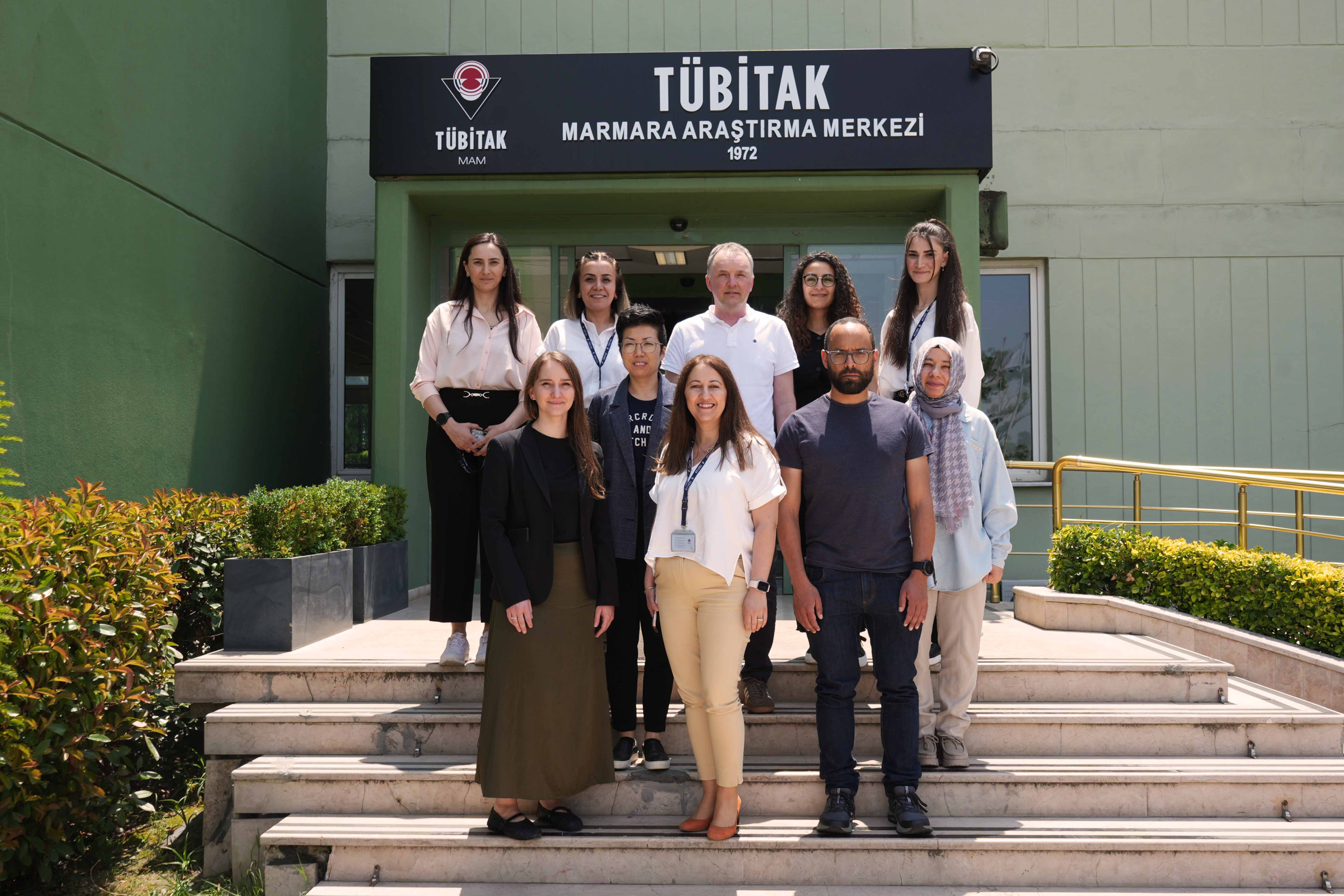
The SUPREME project has officially executed the Kickoff and 1st General Assembly Meeting, hosted by the TÜBİTAK Marmara Research Centre (TÜBİTAK MAM) in Turkey. The event brought together the project’s international consortium—spanning seven countries—for the first time to align technical strategies, evaluate work packages, and establish a clear path towards sustainable, high-performance green hydrogen H2 production.
Co-ordinated by the University of Southern Denmark (SDU), the three-year SUPREME initiative addresses three of the most critical barriers in modern proton exchange membrane (PEM) electrolysis: overall stack and system efficiency limitations, the high cost and supply chain vulnerability of iridium catalysts, and the environmental persistence of per- and polyfluoroalkyl substances (PFAS), often termed 'forever chemicals'.
A Balanced, Consortium-Wide Approach to PEM Electrolyser Research
Over the next three years, the SUPREME partners will combine their expertise to develop a comprehensive suite of alternative materials and engineering systems. The research program is structured to distribute key technical milestones across the international consortium:
- PFAS-Free Membrane Development: Developing the next generation of microporous, PFAS-free proton exchange membranes (NF-PEM) and ionomers. This crucial material development is led by TÜBİTAK MAM, leveraging over two decades of polymer membrane chemistry expertise to match or exceed the durability of traditional fluorinated membranes.
- Low-Iridium Catalysts & Circular Economy: Designing high-performance oxygen evolution reaction (OER) catalysts to reduce reliance on critical raw materials such as iridium, targeting a 75% reduction in metal loading. This effort, alongside designing circular recycling protocols capable of reclaiming up to 90% of active catalyst materials from decommissioned systems, is co-developed by SDU and the British catalyst manufacturer Ames Goldsmith Ceimig.
- Advanced Manufacturing & Membrane Testing: Scaling up automated catalyst-coated membrane (CCM) production methodologies to manufacture high-efficiency membrane electrode assemblies (MEAs), spearheaded by Fraunhofer ISE (Germany). In parallel, TU Graz (Austria) leads the extensive testing, degradation analysis, and electrochemical characterisation of the novel membranes to verify their operational stability and commercial viability.
- Innovative Stack & System Design: Integrating these newly developed components into highly efficient, novel centrifugal rotating electrolyser architectures to improve operational dynamics, a cell and stack developed and evaluated by Element One Energy (EoneE) (Norway).
TÜBİTAK MAM Official Kickoff Post: Read the Announcement Here


.png)
.png)